When the Sky Turns Orange: What Wildfire Smoke Is Really Doing to Your Cat's Lungs
If you've lived in California for any stretch of time, you know the drill. August rolls around, or October, or honestly just about any month anymore, and the horizon goes hazy. The air smells like a campfire that got out of hand. You check AQI apps obsessively and remind yourself to stay inside. You think about your lungs.
But here's the thing: you're probably not thinking nearly enough about your cat's lungs.
While you're closing windows and pulling on an N95, your cat is curled up on the couch breathing the same compromised air — and their respiratory system is handling it very differently than yours. California veterinarians are seeing the consequences firsthand, and what they're describing is both more serious and more preventable than most pet owners realize.
Cats Breathe Differently — and That's a Problem
To understand why smoke hits cats so hard, you need to understand a little bit about how their airways are built. Cats are obligate nose breathers, meaning they rely on their nasal passages to filter, warm, and humidify incoming air before it reaches their lungs. It's an elegant system under normal conditions. Under smoky conditions, it becomes a liability.
Wildfire smoke isn't just regular air with a campfire scent. It's a complex chemical cocktail — fine particulate matter (PM2.5), carbon monoxide, volatile organic compounds, and a rotating cast of toxic byproducts depending on what's burning. Homes, cars, dry chaparral, industrial facilities — California fires consume all of it, and the resulting smoke is chemically distinct from, say, a wood-burning fireplace.
Those fine particles are small enough to bypass the nose's filtering mechanisms entirely and burrow deep into lung tissue. In cats, whose respiratory tracts are already narrower and more reactive than in humans, this kind of particulate exposure triggers inflammation fast. The bronchioles — the tiny airways that branch through the lungs — can constrict and swell, making every breath a little harder than the last.
The Warning Signs You Might Be Missing
This is where it gets tricky. Cats are famously stoic. A dog might cough dramatically, wheeze audibly, or refuse to eat in a way that clearly signals something is wrong. Cats tend to just... get quieter. More withdrawn. A little less interested in food. And because smoke-related respiratory distress often builds gradually over days of exposure rather than appearing suddenly, owners frequently don't connect the symptoms to air quality at all.
Veterinarians across the state report that during and after major fire events, they see a spike in cats presenting with symptoms that owners initially attributed to something else entirely — a cold, stress, aging, or just a weird mood.
Here's what to actually watch for during smoke events:
- Increased respiratory rate — count your cat's breaths per minute while they're resting. More than 30 breaths per minute is a red flag.
- Open-mouth breathing — cats almost never breathe through their mouths unless something is seriously wrong.
- Audible wheezing or crackling sounds when breathing
- Persistent coughing or gagging, especially if it's new behavior
- Lethargy that feels different from normal laziness — an unwillingness to engage, move, or respond to stimulation
- Decreased appetite combined with any of the above
- Blue or gray tint to gums or tongue — this is an emergency, get to a vet immediately
Cats with pre-existing conditions — asthma, chronic bronchitis, heart disease, or any upper respiratory history — are at significantly elevated risk and should be monitored even more closely during smoke events.
Indoor Air Is Not the Safe Haven You Think It Is
One of the most common misconceptions CalCat hears from California cat owners is that keeping cats strictly indoors during fire season is sufficient protection. It's a good start, but it's not the whole story.
Research on indoor air quality during wildfire events consistently shows that PM2.5 levels inside homes can reach 70 to 80 percent of outdoor levels within hours of a smoke event, especially in older construction with gaps around doors, windows, and ventilation systems. California's housing stock includes a lot of older homes, particularly in the Bay Area, Los Angeles, and the Central Valley — regions that also happen to sit in the path of major fire corridors.
Central air and heating systems without proper filtration can actively circulate smoky air throughout a home. Candles, incense, and even cooking can layer additional particulates on top of what's already infiltrated from outside.
So what actually works?
HEPA filtration is your best tool. A true HEPA air purifier — not just a filter marketed with HEPA-adjacent language — can remove particles as small as 0.3 microns, which captures the majority of wildfire particulates. Size the purifier to your room's square footage, not just to what looks good on a shelf. During active smoke events, run it continuously in the rooms where your cat spends the most time.
Upgrade your HVAC filter. If your home has central air, swap to a MERV-13 filter or higher. Check it more frequently during fire season — a clogged filter is worse than no filter.
Seal gaps proactively. Weather stripping around doors and windows isn't just for energy efficiency. It meaningfully reduces smoke infiltration during air quality events.
Avoid adding to the problem. No candles, no incense, no aerosol sprays during smoke events. Your cat's airways don't need the extra load.
What California Vets Are Seeing — and Saying
The veterinary community in California has been paying close attention to the intersection of climate change and feline health, and the picture they're describing isn't exactly reassuring.
Practitioners in fire-prone regions — Sonoma County, the Sierra Nevada foothills, parts of San Diego and Riverside counties — report that respiratory presentations in cats have become noticeably more common in the years following the state's most destructive fire seasons. Some are seeing cats with what appears to be smoke-triggered asthma flares in animals with no prior asthma history. Others are tracking longer recovery times in cats with chronic respiratory conditions.
The concern isn't just acute illness. Repeated exposure to wildfire smoke over multiple fire seasons may cause cumulative lung damage that doesn't show up clearly until years later. California's cats — like California's people — are living through fire seasons that are longer, more frequent, and more intense than anything in recent recorded history. The long-term respiratory data on that reality is still being written.
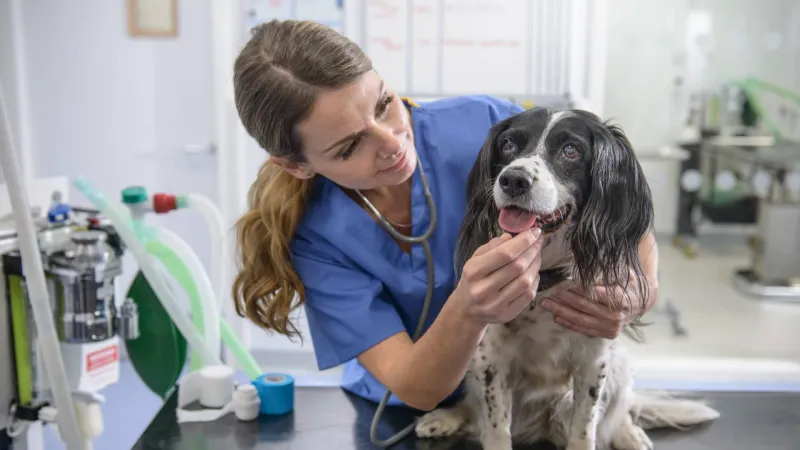
For now, vets are urging owners to treat air quality events with the same seriousness they'd apply to any other health hazard. If your cat is showing respiratory symptoms during or after a smoke event, don't wait it out. Call your vet. Describe what you're seeing. Bring them in.
Building a Smoke Season Routine
California fire season used to be a summer phenomenon. Now it's closer to a year-round reality in much of the state. That means building smoke preparedness into your regular pet care routine rather than scrambling every time a new fire breaks out.
Keep an air purifier running in your home's main living space throughout fire season — not just when AQI hits a certain number. Stock up on HEPA filters so you're not caught without one when supply chains tighten during a major fire event (and they do). Make sure your vet has your cat's baseline respiratory health on record so any changes are easier to identify.
And pay attention to your cat's breathing. Not in a panicked, obsessive way — just the way you'd pay attention to any family member's health. A few seconds of observation a day during smoke season could be the difference between catching a problem early and dealing with a crisis.
Your cat can't check the AQI app. That part's on you.