Old Cat, New Tricks: How California Vets Are Finally Getting Serious About Senior Cat Pain
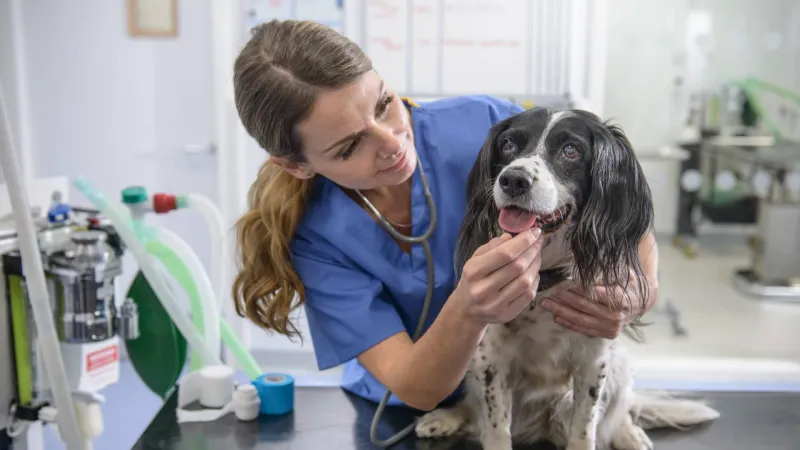
Photo: veterinarian examining senior gray cat on exam table gentle care, via wallpapers.com
Meet Persimmon. She's a sixteen-year-old tortoiseshell in Pasadena who stopped jumping onto the bed about two years ago. Her owner, a landscape architect named Tomás, assumed it was just age catching up with her. She was still eating, still grooming, still occasionally demanding attention at 3 a.m. She seemed fine. Tomás mentioned the behavior change to his vet almost as an afterthought during a routine checkup.
The vet ran a new pain assessment protocol that had recently been adopted by the clinic. The results were striking. Persimmon wasn't "slowing down" — she was in significant chronic pain from degenerative joint disease. She had likely been hurting for over a year.
"I felt terrible," Tomás says. "She wasn't complaining. I didn't know."
Persimmon's story is far from unique. It sits at the center of one of the most significant shifts happening in California veterinary medicine right now.
The Stoicism Problem
Cats are, evolutionarily speaking, masters of disguise when it comes to pain. As both predator and prey in the wild, showing weakness is dangerous. Domestic cats have inherited this trait in full — they suppress behavioral signs of discomfort with remarkable consistency, which means that by the time a cat is visibly struggling, the underlying problem is often quite advanced.
This biological reality has created a blind spot in veterinary medicine that persisted for decades. Pain management in cats lagged significantly behind dogs and humans, partly because the signs were harder to read, and partly because the pharmaceutical options were more limited. Many vets, and most owners, defaulted to a simple and deeply flawed assumption: if the cat is still eating and not crying out, it's probably okay.
We now know that's wrong — and California's veterinary community is leading the charge in changing how we think about feline aging.
New Tools for an Old Problem
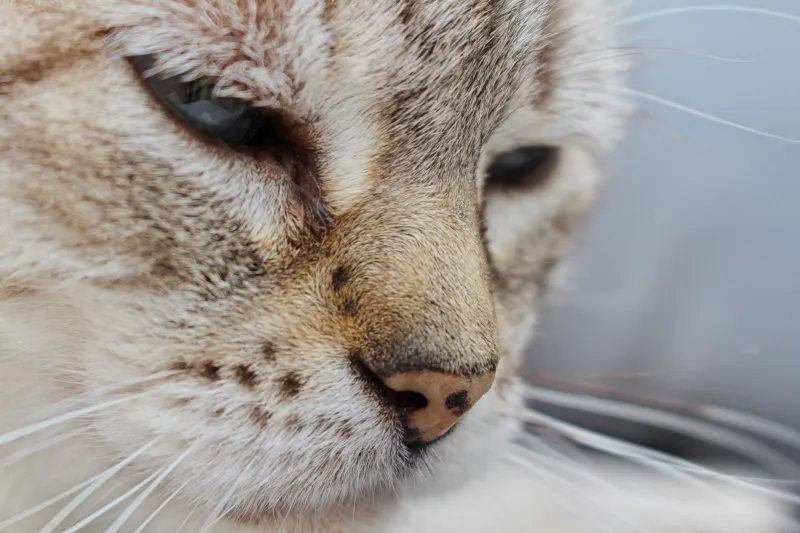
The Feline Grimace Scale, developed by researchers at the Université de Montréal and now being adopted by progressive clinics across California, gives veterinarians a standardized, evidence-based way to assess acute pain in cats using five facial action units: ear position, orbital tightening, muzzle tension, whisker change, and head position. It's a deceptively simple tool that has meaningfully improved pain detection in clinical settings.
For chronic pain — which is where senior cats most commonly suffer — the picture is more complex. Osteoarthritis affects an estimated 90 percent of cats over twelve years old, according to research published in the Journal of Feline Medicine and Surgery, yet it remains dramatically underdiagnosed in clinical practice. The reason is partly the stoicism problem, and partly that cats with arthritis don't always limp the way dogs do. Instead, they stop doing things: jumping, climbing, playing, grooming hard-to-reach spots.
Veterinarians at UC Davis's William R. Pritchard Veterinary Medical Teaching Hospital have been refining owner-reported quality-of-life assessments that help capture these subtle behavioral changes at home, where cats are more relaxed and their true functional limitations are more visible. The Feline Musculoskeletal Pain Index (FMPI) is one such tool — a questionnaire that asks owners to track specific activities over time, creating a longitudinal picture that a single clinic visit simply can't provide.
"Owners are our best diagnostic partners for chronic pain," says Dr. Beatrice Hahn, a feline internal medicine specialist practicing in the Bay Area. "They see the cat every day. We see them for twenty minutes once a year. Teaching owners what to look for is one of the most important things we can do."
The Pharmaceutical Revolution
For years, pain management in senior cats was constrained by a frustrating pharmacological reality: cats metabolize many common pain medications differently than dogs or humans, and several drugs that work well in other species are outright toxic to cats. NSAIDs — the go-to for arthritis pain in dogs — require extreme caution in cats due to kidney and gastrointestinal risks.
That landscape is shifting. In 2022, the FDA approved frunevetmab (sold under the brand name Solensia) — a monoclonal antibody therapy specifically designed to control osteoarthritis pain in cats. It works by targeting nerve growth factor, a key driver of chronic pain signaling, and it's administered as a monthly injection. Early clinical data and real-world reports from California clinics have been encouraging, with many owners describing meaningful improvements in mobility and engagement within weeks.
"It's genuinely been a game-changer for some of my patients," says Dr. Priya Nair, who runs a senior cat specialty practice in San Jose. "I have cats who hadn't jumped onto furniture in two years who are doing it again. That's not nothing — that's quality of life."
Beyond frunevetmab, multimodal pain management — combining pharmaceutical approaches with environmental modifications, physical therapy, acupuncture, and dietary supplementation — is gaining traction in California's more progressive veterinary practices. Omega-3 fatty acids, joint supplements containing glucosamine and chondroitin, and even therapeutic laser treatments are increasingly part of the senior cat conversation.
What Owners Need to Watch For
You don't need a veterinary degree to start paying closer attention to your senior cat's comfort. Here are the behavioral shifts that should prompt a conversation with your vet:
- Reduced jumping or climbing. If your cat has stopped accessing favorite high spots, don't chalk it up to laziness.
- Changes in grooming. Cats in pain often under-groom, leading to a dull or matted coat — especially on the lower back and hindquarters, which are hard to reach when movement is painful.
- Litter box hesitation. A cat who's reluctant to step into or out of the box may be experiencing joint pain, not a behavioral problem.
- Increased irritability or withdrawal. Chronic pain changes personality. A cat who's become less social or more reactive to touch may be telling you something important.
- Sleeping more in unusual positions. Watch for postures that suggest guarding or discomfort rather than relaxed rest.
If your cat is ten or older, consider asking your vet specifically about a pain assessment at your next visit — even if everything seems fine. The whole point of these new protocols is to catch what's hidden.
A Different Way of Thinking About Old Age
Persimmon is doing better. Three months into her pain management protocol — a combination of monthly frunevetmab injections, a ramp up to the bed, and a heated orthopedic sleeping pad — she jumped onto the couch on her own for the first time in over a year. Tomás filmed it on his phone. He cried a little.
"She's still old," he says. "She's still slow. But she seems comfortable. She seems like herself again."
That distinction — between aging and suffering — is exactly what California's veterinary community is working to make legible for every cat owner in the state. Getting older isn't supposed to hurt. And for our cats, who can't tell us when it does, we have to be the ones paying attention.