Failing the Test Before the Test Even Starts: How Shelter Behavior Assessments Are Getting California Cats Killed
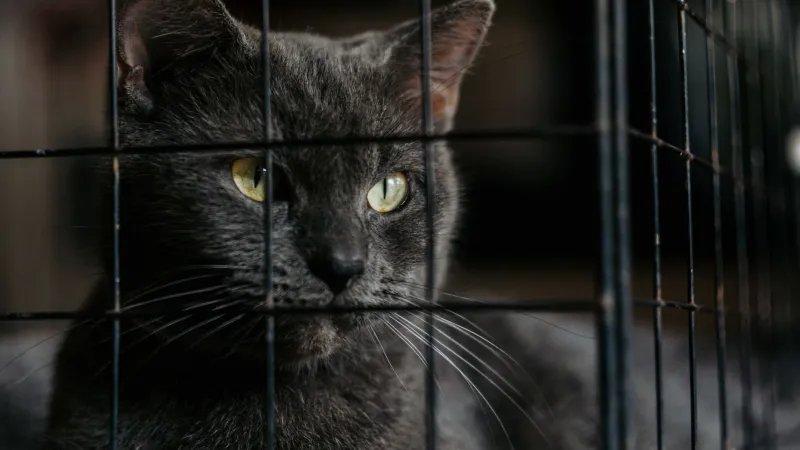
Imagine being yanked from everything familiar, dropped into a loud, strange-smelling building, and then asked to demonstrate your personality to a stranger who will decide your fate in under ten minutes. For most cats entering California's shelters, that's not a hypothetical — it's Tuesday.
Behavioral assessments have long been considered a cornerstone of responsible shelter intake. The logic sounds reasonable: evaluate each animal, flag potential risks, match the right pet with the right home. But a growing body of feline behavioral science is calling out a serious flaw in that logic. The tools we're using to read cats were largely adapted from dog evaluation frameworks, and they are, in the words of more than a few California shelter professionals, spectacularly bad at understanding how cats actually work under stress.
The Problem With a Ten-Minute Snapshot
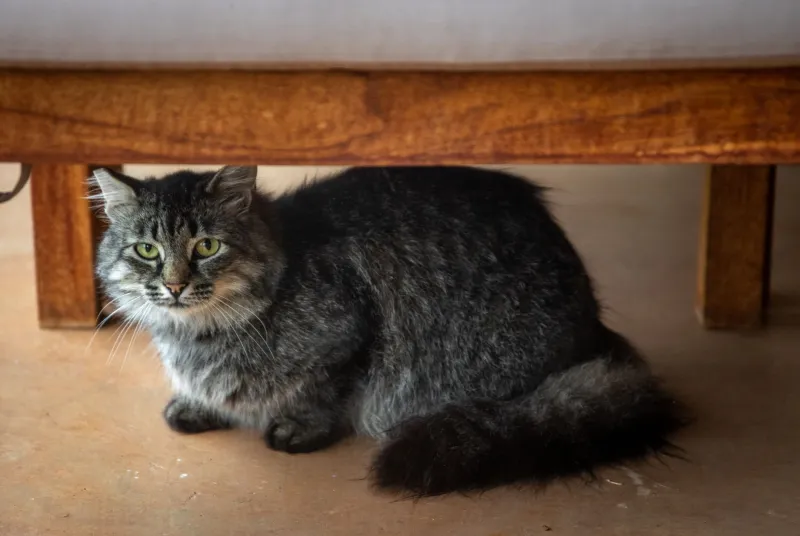
Here's what we know about cats and stress: they are masters of suppression. Unlike dogs, who tend to externalize anxiety through barking, pacing, or jumping, a stressed cat will often go completely still. They flatten. They stare. They stop responding to stimulation. In a dog, that kind of shutdown might read as calm. In a cat, it's frequently the behavioral equivalent of a system crash — and evaluators who aren't trained specifically in feline stress responses can easily mistake it for aggression, fearfulness, or a behavioral problem that doesn't actually exist.
Dr. Ingrid Kolter, a shelter behavior consultant who has worked with intake programs across the Bay Area, puts it bluntly: "We've been asking cats to perform under conditions that would make most cats fail, and then we're surprised when the data tells us a huge percentage of shelter cats are 'unadoptable.' The data isn't telling us about the cats. It's telling us about the test."
The science backs her up. Research on feline stress responses — including work coming out of UC Davis's veterinary behavior program — consistently shows that cats require significantly longer acclimation periods than dogs before their baseline personality becomes visible. A cat who hisses and swipes on day two may be rubbing her face on your hand by day seven. But in an overcrowded shelter operating under resource pressure, day seven is a luxury many cats never get.
What Standardized Looks Like — and Why That's the Issue
Most shelter behavioral assessments in California still rely on some version of a standardized protocol: a checklist of observable behaviors evaluated during a set time window, often within the first 24 to 72 hours of intake. Evaluators watch for things like response to handling, reaction to sudden stimuli, willingness to engage, and signs of fear or aggression.
The problem isn't the categories — it's the context. Cats experiencing acute stress exhibit behaviors that are nearly indistinguishable from what might be classified as temperament problems. A cat who scratches during handling may be terrified, not feral. A cat who refuses to eat during evaluation may be shutting down from sensory overload, not demonstrating a feeding issue. A cat who hisses when a stranger reaches into her cage is probably just a cat.
Yet these behaviors, when logged against a standardized rubric, can result in a cat being flagged as high-risk, behaviorally complex, or unsuitable for general adoption — classifications that dramatically reduce her chances of making it out alive.
Shelters in Los Angeles, San Diego, and the Central Valley have all grappled publicly with this tension. The pressure to move animals through quickly — especially in high-intake facilities — means that nuanced, time-intensive behavioral work often gets deprioritized. And when it does, cats pay the price.
The Environment Is Part of the Evaluation
One of the most compelling arguments coming from reform-minded behaviorists is that shelter environment itself needs to be considered a variable in any behavioral assessment — not a neutral backdrop.
Noise levels, cage size, proximity to other animals, lighting, and the presence of hiding spaces all have measurable effects on feline stress hormones and, consequently, on observed behavior. A cat evaluated in a small, brightly lit cage next to a barking dog is not the same cat she would be in a quieter, more enclosed space with a place to hide and a few hours to settle.
Some California shelters are already making changes. The San Francisco SPCA has implemented what they call "behavior over time" protocols, which delay formal assessment until a cat has had at least 48 hours to decompress. Several Southern California facilities have begun retrofitting evaluation spaces with hiding boxes, vertical space, and sound dampening — simple, low-cost interventions that can dramatically change what a cat's behavior looks like during assessment.
The results, anecdotally, are striking. Staff at one Los Angeles-area shelter reported that after introducing basic hide boxes into intake cages, the number of cats flagged as "fearful/aggressive" during their first evaluation dropped by nearly a third.
Rethinking What We're Actually Measuring
Part of the deeper issue here is a question about what behavioral assessments are supposed to accomplish. If the goal is to identify a cat's true temperament — to give adopters accurate information and match animals with appropriate homes — then an evaluation conducted under acute stress is not measuring temperament. It's measuring stress response. Those are not the same thing.
Behaviorists pushing for reform argue that the field needs to shift toward longitudinal assessment models: observing cats over multiple days, in multiple contexts, with input from the staff members who interact with them daily. Kennel technicians, volunteers, and foster caregivers often have far richer behavioral data than any single formal evaluation captures — and that information is frequently underutilized in adoption decisions.
Foster-based assessment is another tool gaining traction. Getting a cat out of the shelter environment entirely, even for a week, can reveal a personality that the shelter setting had completely obscured. California's foster networks, which expanded significantly during the pandemic, are increasingly being seen not just as a capacity solution but as a behavioral assessment tool in their own right.
The Stakes Are Not Abstract
None of this is purely academic. California remains one of the highest-intake states in the country for shelter cats, and while the no-kill movement has made real progress, behavioral classifications continue to be one of the primary justifications for euthanizing animals who might otherwise be adoptable.
When a cat is misread as aggressive or unadoptable because the evaluation couldn't see past her stress response, the outcome isn't just a longer shelter stay. It can be a death sentence for an animal whose only real problem was that she needed more time than the system was willing to give her.
The science is clear. The solutions are available. What's needed now is the institutional will to stop measuring cats by a yardstick designed for a completely different animal — and to build assessment systems that are actually built to find out who a cat is, not just how badly she's struggling to cope.
For the cats sitting in cages right now, waiting to be understood, that shift can't come fast enough.