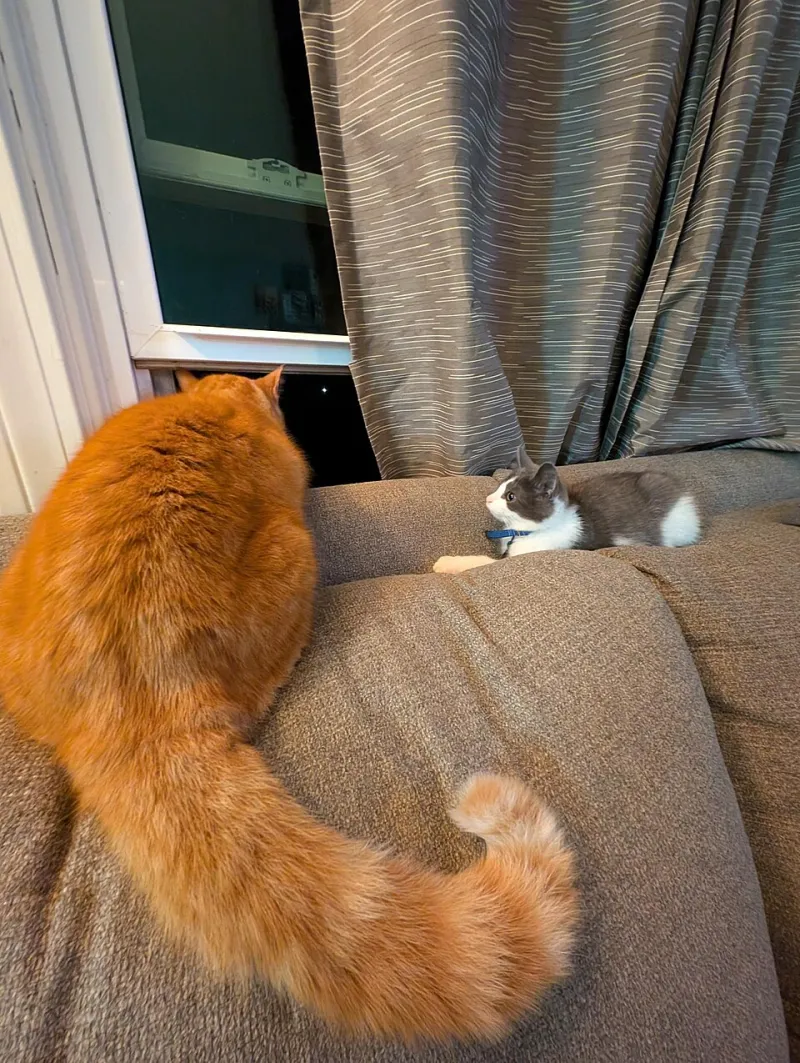
Kittens Get All the Likes — But Adult Cats Are the Real Adoption Secret

Walk into almost any California animal shelter on a weekend afternoon and you'll see the same scene play out. A family clusters around a kitten enclosure, phones out, cooing over a pair of eight-week-olds tumbling over each other. Three cages down, a three-year-old tabby named Gerald sits with quiet dignity, watching the whole thing. Gerald has been there for eleven weeks.
This is the adoption paradox in action — and it's one of the most persistent, frustrating puzzles in California's animal welfare community.
The Numbers Don't Lie (But They Do Sting)
Data from California's shelter system paints a stark picture. According to the UC Davis Koret Shelter Medicine Program, adult cats — generally defined as one year and older — consistently make up the majority of feline intakes at California shelters, yet they're adopted at significantly lower rates than kittens. In high-intake urban shelters like those in Los Angeles and the Bay Area, adult cats can wait three to five times longer for placement than kittens under six months.
The irony? Kitten season creates a temporary surge that floods shelters and strains resources, while adult cats quietly occupy kennel space for months. Some never leave.
"We see adopters come in specifically requesting a kitten, and when we're out of kittens, they leave empty-handed," says one adoption counselor at a Bay Area municipal shelter who asked not to be named. "They walk right past a dozen perfectly wonderful adult cats without a second glance. It's heartbreaking, honestly."
The Psychology Behind the Kitten Fixation
So what's actually driving this? Behavioral scientists have a few compelling explanations, and none of them are particularly flattering to human decision-making.
First, there's what researchers call the "baby schema" effect — the same neurological response that makes human infants irresistible. Big eyes, round faces, clumsy movements. Kittens trigger a caregiving instinct that's deeply hardwired. A 2022 study out of the University of Vienna found that exposure to baby-faced animals activated the same reward centers in adult humans as exposure to human infants. Shelters are, in a sense, fighting biology.
Then there's the blank-slate fantasy. Many adopters genuinely believe that getting a kitten means they can shape the cat's personality from scratch — that a kitten raised with love will become a perfectly bonded companion. It's a romantic idea. It's also largely a myth.
"Cat personality is substantially genetic," explains Dr. Mikel Delgado, a feline behaviorist and researcher who has worked extensively with California shelters. "A shy kitten is very likely to become a shy adult. An adult cat's temperament has already stabilized, which means what you see is much more reliably what you get."
That's actually a massive selling point — one that shelters are only beginning to leverage effectively.
What You See Is What You Get (And That's a Good Thing)
Adult cats come with a known personality profile. Shelters with strong behavioral assessment programs can tell you whether a cat is laid-back around kids, tolerant of dogs, or a lap cat who'll follow you from room to room. With a kitten, you're essentially gambling.
Adult cats also tend to skip the more chaotic phases of feline adolescence — the curtain-climbing, the 3 a.m. sprinting, the experimental biting. For working adults, apartment dwellers, or anyone who values their sleep, a mellowed-out four-year-old cat can be a dramatically better fit than a six-month-old with boundless energy and zero impulse control.
And the adaptability argument — the idea that kittens bond more deeply because they're raised from young — doesn't hold up under scrutiny. Research consistently shows that adult cats form strong attachments to new owners. The adjustment period might take a few extra weeks, but the resulting bond is no less real.
How California Shelters Are Trying to Flip the Script
A handful of California shelters are getting creative with how they market adult cats, and early results are encouraging.
The Humane Society Silicon Valley has experimented with what they call "personality-forward" profiles — adoption listings that lead with behavioral traits and lifestyle compatibility rather than age or appearance. Instead of "3-year-old domestic shorthair," you get "Gerald is the coworker you always wanted: calm, entertaining from a respectful distance, and absolutely not going to climb your laptop." Click-through rates on these profiles have reportedly outperformed standard listings.
Other shelters are leaning into social media differently. Rather than competing with kitten content on cuteness alone — a fight they'll never win — they're building narratives. Long-stay cats get backstories. Adopters are encouraged to share "one month later" updates. It's less about going viral and more about building genuine emotional investment.
Some organizations have introduced "senior-for-senior" programs, waiving adoption fees for cats over seven years old when adopted by adults over sixty. The San Diego Humane Society has run similar initiatives and reported meaningful upticks in older cat placements as a result.
The Role of Adoption Counselors
One underappreciated factor is the quality of the adoption conversation itself. When a counselor takes the time to ask an adopter real questions — Do you work long hours? Do you have young kids? Are you looking for a cuddler or an independent companion? — and then matches them thoughtfully with an adult cat, the results tend to be sticky. These adoptions are less likely to be returned.
"The best thing I can do is slow someone down," says one counselor at a Los Angeles-area rescue organization. "When someone comes in saying 'I want a kitten,' I don't argue. I just start asking questions. And nine times out of ten, by the end of the conversation, they're looking at adults."
That kind of consultative approach requires training, time, and staffing — resources that underfunded shelters often can't guarantee. It's a systemic problem as much as a marketing one.
What You Can Do Right Now
If you're considering adding a cat to your household, here's a genuinely radical suggestion: skip the kitten filter entirely on your next shelter search. Browse adult cats by personality description. Visit a shelter and ask a counselor to introduce you to a long-stay resident. Bring your actual lifestyle to the conversation — your work schedule, your home size, your energy level — and let them match you accordingly.
Gerald, for the record, was eventually adopted after twelve weeks at the Bay Area shelter. His new owner, a software engineer who works from home, says he's the best coworker she's ever had.
That tracks.