The Shelter Waiting Game: Why California's Friendliest Adult Cats Can't Catch a Break
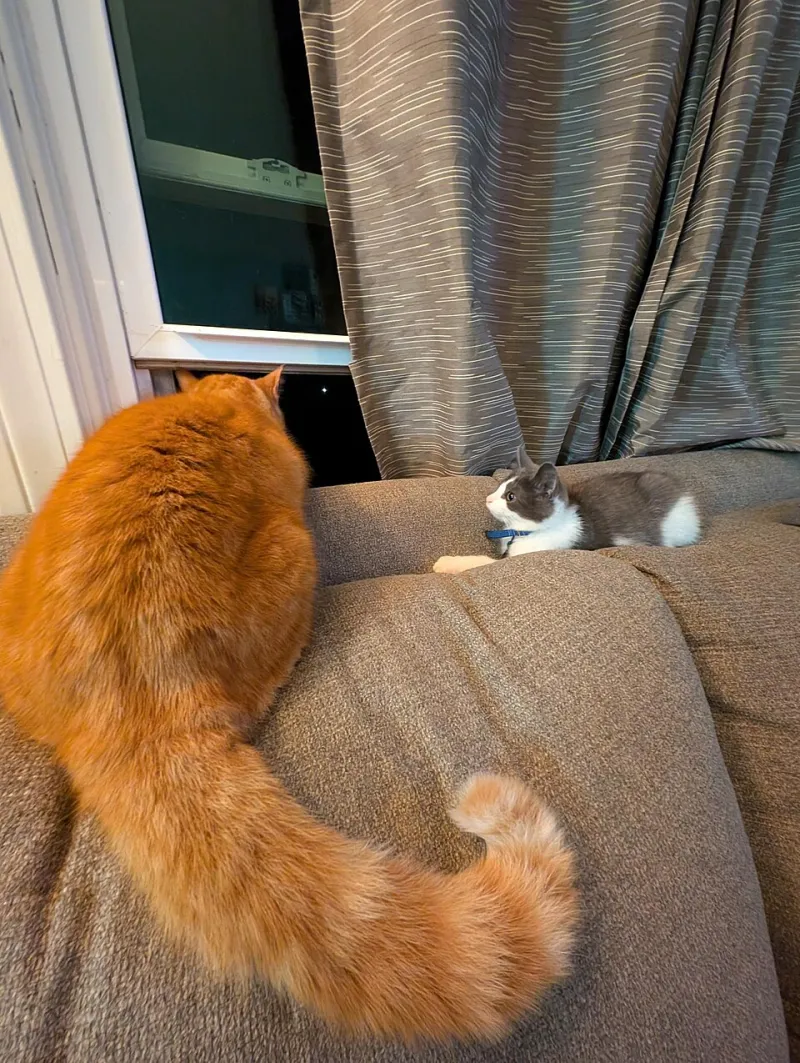
Photo: GrinningIodize, CC BY-SA 4.0, via Wikimedia Commons
Walk into almost any California animal shelter on a Saturday morning and you'll notice something strange. The kitten room is electric — families crowding the glass, kids pressing their noses against the enclosures, adoption paperwork flying. Meanwhile, two hallways over, a four-year-old tabby named Gerald has been sitting in the same kennel for eleven weeks. He's healthy. He's neutered. He purrs the moment you touch him. Nobody's come for Gerald.
This isn't a rare tragedy. It's a pattern playing out in shelters from San Diego to Redding, and it has researchers, rescue directors, and behavioral scientists genuinely puzzled — and increasingly motivated to fix it.
The Numbers Don't Lie (But They Do Sting)
California is home to some of the most progressive animal welfare infrastructure in the country, yet adult cats remain one of the most persistently overlooked populations in the shelter system. According to data compiled by the UC Davis Koret Shelter Medicine Program, adult cats — generally defined as one year and older — consistently show longer average length of stay than kittens, often by a factor of two to four times. In some high-intake urban shelters, adult cats make up the majority of euthanasia cases not because of aggression or illness, but simply because they ran out of time.
Shelter directors across the state describe the same seasonal rhythm: spring and summer bring an avalanche of kittens, adoption traffic spikes, and adult cats get quietly buried under the excitement. By fall, those kittens have grown into young adults — and the cycle repeats.
"We call it the kitten pipeline problem," says one rescue director at a Bay Area nonprofit who asked to remain anonymous due to organizational politics. "Every year we scramble to move adults before the next wave hits. It's exhausting, and it's heartbreaking, because these cats have so much to offer."
What's Actually Going On in the Adopter's Brain
Behavioral scientists who study human-animal interaction have a few theories about why kittens dominate the adoption floor, and most of them trace back to a concept called neoteny — the retention of juvenile physical features that trigger caregiving instincts in humans. Big eyes, round faces, wobbly movements. Kittens are, in a very literal neurological sense, hard to resist.
Dr. Mikel Delgado, a cat behavior researcher and postdoctoral fellow affiliated with UC Davis, has written extensively about the cognitive shortcuts people use when choosing a pet. "Adopters often rely on appearance and first impressions far more than they realize," she's noted in interviews. "A cat who's shy in a shelter environment might be labeled as unfriendly, when really they're just stressed. That first encounter can be the difference between going home and staying behind."
Shelter environments are, by design, stressful for cats. Fluorescent lighting, ambient noise, the scent of dozens of other animals — these conditions suppress the very behaviors that make a cat seem appealing. Adult cats, who may have more established stress responses than kittens, often shut down or hide. Kittens, with less life experience and more natural curiosity, frequently bounce around regardless of the environment. The result is a deeply unfair comparison.
The 'Blank Slate' Myth
One of the most persistent misconceptions driving adoption bias is the idea that kittens are blank slates — perfectly moldable, personality-free vessels that will become exactly the cat you want them to be. Adult cats, by contrast, are sometimes perceived as coming pre-loaded with problems.
The science doesn't support this. Cat personality research, including landmark studies out of the University of Helsinki, suggests that feline temperament is significantly shaped by genetics and early socialization — most of which is already established by the time a kitten leaves the shelter anyway. What you see in an adult cat is, in many ways, a more accurate preview of what you're actually getting.
"When you adopt an adult cat, the guesswork is largely gone," explains Dr. Rachel Casey, director of canine and feline behavior science at Dogs Trust, whose research on shelter animal behavior has been widely cited in the US welfare community. "Their energy level, their tolerance for handling, their relationship with other animals — you can actually assess those things. With a kitten, you're making a twenty-year bet on a personality that hasn't fully developed yet."
Where Shelters Are Dropping the Ball
Marketing matters enormously in adoption outcomes, and many California shelters are still playing catch-up when it comes to presenting adult cats effectively. Kennel cards that list a cat's age without context, photos taken under harsh shelter lighting, brief behavioral notes that emphasize what a cat "doesn't like" rather than what they love — these small choices compound into a significant disadvantage.
Some shelters are fighting back with creative programming. The ASPCA's "Meet Your Match" program, adopted by several California facilities, uses behavioral assessments to pair adopters with cats based on lifestyle compatibility rather than appearance. Others have implemented "free roam" adoption rooms where adult cats can interact with potential adopters in a lower-stress environment, often with dramatically better results.
Los Angeles-based rescue group Stray Cat Alliance has experimented with "senior cat spotlights" on social media — short video profiles that show cats in foster homes rather than shelter kennels. The difference in engagement, and in adoption rates, has been measurable.
What You Can Do Right Now
If you're thinking about adding a cat to your household, here's a genuinely radical suggestion: skip the kitten room on your first pass. Spend time with the adults. Ask shelter staff which cats are "hidden gems" — they almost always know. Request a quiet room where you can sit with a cat for fifteen or twenty minutes without the chaos of the main floor.
Consider your actual lifestyle. If you work long hours, a confident adult cat who's comfortable with independence might genuinely suit you better than a kitten who needs constant stimulation and supervision. If you have young kids, an adult cat whose tolerance for noise has already been tested is a safer bet than rolling the dice on an unknown kitten personality.
Gerald, by the way, was eventually adopted — twelve weeks into his stay, by a retired teacher in Alameda who wanted a calm companion and had specifically asked for an adult. He was asleep on her couch within forty-eight hours.
The cats who need you most aren't always the ones making the most noise. Sometimes they're just quietly waiting for someone to look past the kitten in the next room.