That Rumbling Sound Isn't Just Happiness — Your Cat's Purr Is Doing Something Wild

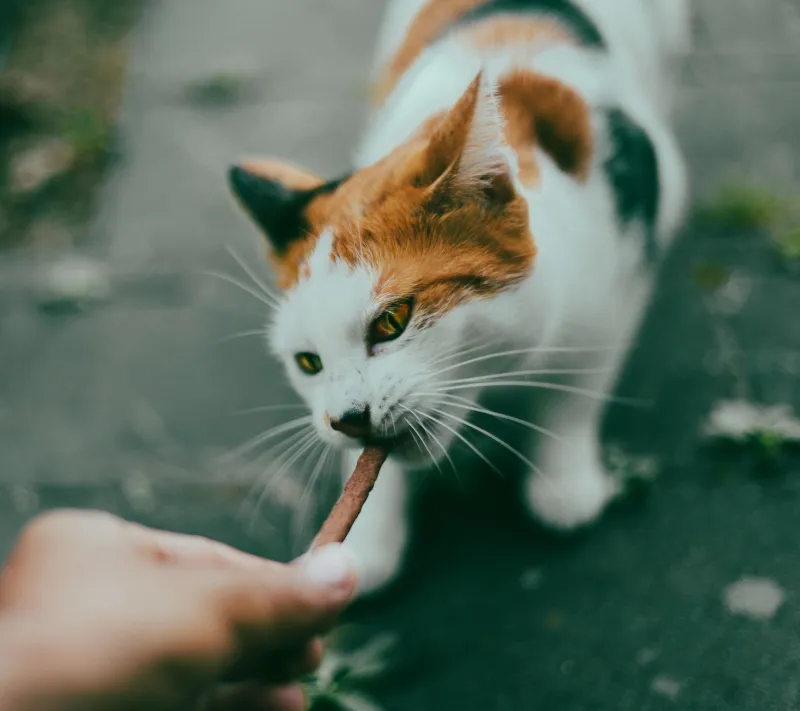
Photo by Photo by Jack Brind on Unsplash on Unsplash
There's nothing quite like settling onto the couch after a long day, your cat curled up on your chest, that deep rhythmic vibration rolling through their whole body. It feels like the universal symbol of feline bliss. And honestly? Sometimes it is. But if you've ever noticed your cat purring during a vet visit, right after a tumble off the counter, or while staring you down at 6 a.m., you've already stumbled onto one of the more fascinating mysteries in cat behavior: purring isn't just about contentment. Not even close.
Feline behaviorists have spent decades trying to decode what's actually happening when a cat purrs, and the findings are genuinely surprising. This familiar sound — so ordinary that most of us tune it out — turns out to be one of the most versatile communication tools in the animal kingdom.
How Purring Actually Works (It's Weirder Than You Think)
Before we get into what purring means, let's talk about what it is, mechanically speaking. Cats purr by rapidly dilating and constricting the glottis — the part of the larynx that surrounds the vocal cords — during both inhalation and exhalation. This creates a continuous, rhythmic sound that cycles between roughly 25 and 150 Hz depending on the cat and the situation.
That frequency range isn't just a fun fact. Research has shown that vibrations in the 25–50 Hz range can stimulate bone density and promote healing in mammalian tissue. Some scientists have theorized that purring may have evolved partly as a low-energy mechanism for cats to maintain bone and muscle health during long periods of rest — essentially, a built-in recovery tool. Think of it as your cat's version of a vibration therapy plate, except it runs on kibble and spite.
This is one reason veterinary researchers have observed cats purring after injuries or during illness. It's not that they're feeling great about the situation. They may be literally trying to heal themselves.
The Stress Purr Is Real, and It Matters
If you've ever brought your cat to a veterinary clinic and heard them purring in the carrier, you might have thought, "Oh good, they're calm." Your vet probably thought something different.
Stress purring is a well-documented phenomenon. Cats will often purr when they're anxious, frightened, or in pain — and the purr in these situations tends to have a slightly different acoustic quality than a relaxed purr, though it takes a trained ear (or a spectrogram) to detect the difference. Feline behaviorists describe this as a "solicitation purr" in some contexts, but in clinical settings it's often better understood as a self-soothing behavior. Similar to how humans might hum or rock slightly when nervous, cats purr to regulate their own emotional state.
Dr. Karen McComb at the University of Sussex has done some of the most compelling work in this space, identifying what she calls the "solicitation purr" — a purr embedded with a higher-frequency cry that mimics the urgency of an infant's wail. This particular purr pattern, which cats often deploy around feeding time, is apparently very difficult for humans to ignore. We're wired to respond to that cry-like frequency, and cats — whether through learned behavior or something more instinctive — have figured that out.
In plain terms: your cat may have literally evolved to manipulate you with their purr. And honestly, respect.
Reading the Room (and the Rumble)
So how do you tell a happy purr from a stressed one, or a manipulative one? Feline behaviorists suggest looking at the whole picture, not just the sound.
Context is everything. A cat purring while kneading a blanket and slow-blinking at you? That's contentment. A cat purring in a carrier on the way to the vet, body tense and pupils dilated? That's stress management. A cat purring loudly while making sustained eye contact with their empty food bowl at dawn? That's a negotiation tactic.
Body language fills in the gaps. A relaxed purring cat will typically have a loose, soft posture — tail still or gently curled, ears forward or slightly to the side, eyes soft. A stressed purring cat often shows the opposite: tucked tail, flattened ears, tight muscles, wide eyes. The purr might sound similar, but the cat is communicating something entirely different.
Rhythm and volume can shift with intensity. Some cat owners report that their cats' purrs change quality when they're in pain — becoming more irregular or higher-pitched. While this isn't yet fully standardized in feline behavioral research, it's worth paying attention to changes in your individual cat's baseline purring pattern, especially if other behavioral changes accompany it.
The Healing Frequency Hypothesis
Let's come back to that bone density research for a moment, because it's genuinely fascinating and still evolving. The idea that cats may purr partly to stimulate their own tissue repair has led some researchers to explore whether human exposure to cat purring frequencies might offer similar low-level benefits. Studies are small and not yet conclusive, but there's a reason some physical therapists use vibration therapy in the same frequency ranges that cats produce.
Anecdotally — and we want to be clear this is anecdotal — many cat owners in California's large feline rescue communities report that spending time with purring cats during their own recovery periods feels genuinely calming and restorative. Whether that's the vibration, the companionship, or the distraction of having a small furry creature demand your full attention is hard to say. Probably all three.
What This Means for You and Your Cat
Understanding that purring is multidimensional doesn't make it less magical — it makes it more. Your cat is communicating with you in a language that operates partly below your conscious awareness, hitting frequencies that trigger caregiving instincts you didn't even know you had.
The practical takeaway? Don't assume a purring cat is always a comfortable cat. If your cat is purring in an unusual context — after a fall, during handling, at the vet — check in with the rest of their body language. And if something seems off, trust your gut. You know your cat's baseline better than anyone.
The purr is one of the most intimate sounds in the human-animal bond. Now that you know what's really behind it, you can listen to it a little differently — and maybe communicate back a little better.
After all, that's kind of what CalCat is all about.