Good Boys Learn From the Cat: How Rescue Cats Are Becoming Secret Weapons for California's Search-and-Rescue Dog Teams
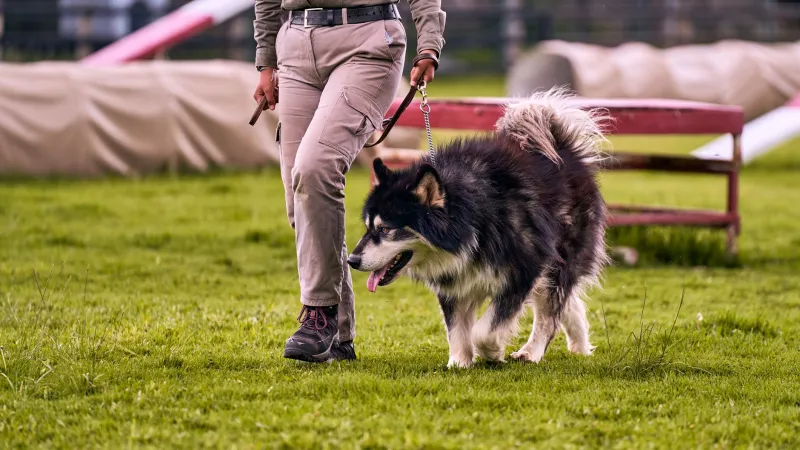
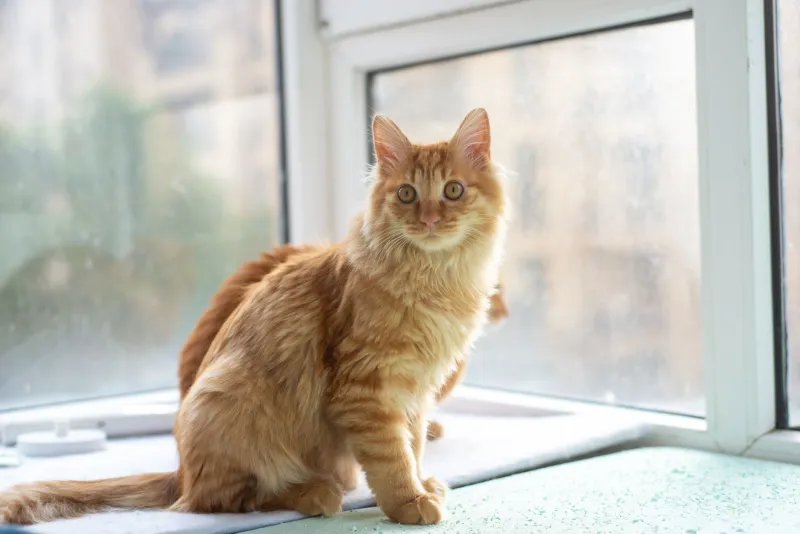
The dog's name is Ranger. He's a three-year-old Belgian Malinois with a nose that can detect a human scent trail 48 hours after the fact, and he is currently being outsmarted by a 12-pound tabby named Gerald.
Gerald is sitting in the center of a training yard at a search-and-rescue facility in the foothills east of Sacramento, doing absolutely nothing. Ranger wants to investigate. His handler is asking him not to. This is, according to the handler, the most important training exercise Ranger will do all week.
"If he can't hold his focus when there's a cat three feet away," she says, keeping her voice even, "he's not going to hold his focus when there's a squirrel on a trail and a missing person 200 meters upwind."
Gerald, for his part, looks profoundly unbothered.
An Unlikely Partnership
Across California, a quiet but growing number of search-and-rescue (SAR) dog training programs have incorporated resident cats into their curriculum — not as props or obstacles, but as active training partners whose presence teaches working dogs some of the most difficult skills in their repertoire: impulse control, sustained focus, and the ability to disengage from a distraction on command.
It's a relationship that works precisely because cats are so spectacularly good at being distracting. They move unpredictably. They make sounds that activate a dog's prey drive. They smell interesting. And unlike a ball or a decoy, a cat cannot be controlled, choreographed, or made to cooperate. That unpredictability is the point.
"You can train a dog to ignore a specific stimulus," explains one SAR dog trainer based in Marin County who has worked with the California Office of Emergency Services on disaster response protocols. "What you can't do is train a dog to ignore every possible stimulus. What you're actually training is the dog's relationship with their handler — the reflex to check in, to defer, to stay on task. A cat is just a very effective way to stress-test that relationship."
Where the Cats Come From
Here's where the animal welfare piece gets genuinely heartwarming. Many of the cats now working alongside SAR dog teams came directly from shelters.
Programs that use resident cats for training typically need animals with a specific temperament: calm, curious rather than fearful, unbothered by noise and sudden movement, and comfortable around large dogs. That profile — confident, socially flexible, low-reactivity — describes a population of cats that shelters often struggle to place. Adult cats with bold personalities can be harder to adopt out than kittens or timid cats who read as more "cuddly." Some were returned by previous adopters who found their confidence came across as aloofness.
At a training facility in Riverside County, the resident cat — a six-year-old former shelter cat named Duchess — has been working with the program for three years. She came in as a pull from a county shelter where she'd been overlooked for months. "She was too assertive for most adopters," her caretaker explains. "She didn't want to sit on your lap. She wanted to be in the middle of whatever was happening. Turns out that's exactly what we needed."
Duchess now earns her keep by existing in the training space during dog sessions, occasionally strolling through an exercise at the worst possible moment, and generally refusing to be intimidated by anything. The dogs who train around her consistently score higher on distraction-proofing evaluations. Several have gone on to active deployment with California SAR teams.
What the Dogs Are Actually Learning
The training methodology varies by program, but the core principle is consistent. Dogs are introduced to the resident cat gradually, at a distance, while performing known commands. Over time, the distance decreases and the cat's behavior becomes less predictable. The dog learns that engaging with the cat — even to look at it — results in the end of the activity they actually want to do.
This isn't about suppressing the dog's instincts. It's about building what trainers call "stimulus control" — the ability to respond to a handler cue rather than an environmental trigger, even under high arousal. For a SAR dog working a disaster site or a wilderness search, that skill is non-negotiable. A dog who breaks focus to investigate a sound or a smell is a dog who might miss the person they're there to find.
"Cats are honest," says one handler who trains dogs for wilderness searches in the Sierra Nevada. "They don't make it easy. A ball stays where you put it. A cat does not. And real searches don't make it easy either."
Some programs have extended the concept further, using cats to help dogs practice "down-stays" in high-distraction environments, to work on leash manners around unpredictable movement, and even to develop the kind of emotional regulation that prevents working dogs from burning out in high-stress deployment scenarios.
A Second Chance That Looks Different
For the cats involved, this is a second chance — just not the kind anyone expected.
The narrative around rescue cats usually ends at adoption: cat leaves shelter, cat goes to a home, cat lives happily ever after. But for a subset of cats — particularly confident, independent adults who don't fit neatly into the lap-cat ideal — a working role in a structured program can offer something a traditional home might not: purpose, stimulation, and an environment that actually suits their personality.
That's not an argument against adoption. It's an argument for expanding what we consider a good outcome. A cat who spends her days in a facility where she is well cared for, clearly valued, and actively contributing to the training of dogs who will go on to find missing people — that's not a consolation prize. That's a life that fits.
"Gerald has a better life here than he would in most homes," says his handler matter-of-factly. "He needs activity, novelty, something to do. Most people want a cat who'll watch Netflix with them. Gerald wants a job."
Ranger, meanwhile, has finally stopped staring at Gerald and is holding his sit. His handler marks the behavior and rewards him. Gerald stretches, yawns, and relocates approximately four inches to the left.
The lesson, apparently, continues.
Expanding the Model
A handful of California programs are now actively partnering with local shelters to identify cats who might be good candidates for working placements — not just SAR training facilities, but fire stations, veterinary training schools, and agricultural inspection programs that similarly benefit from having calm, dog-socialized cats in their environments.
It's a small piece of a much larger puzzle. California still euthanizes far too many cats for space and behavioral reasons. But every unconventional placement — every Gerald, every Duchess — represents a crack in the idea that adoption is the only valid endpoint for a rescue animal.
Sometimes the best home isn't a home at all. Sometimes it's a training yard, a working facility, and a Belgian Malinois who is slowly, reluctantly learning that the cat is not the mission.