Picked Last: The Behavioral Economics of Why California's Easiest Cats Keep Getting Passed Over
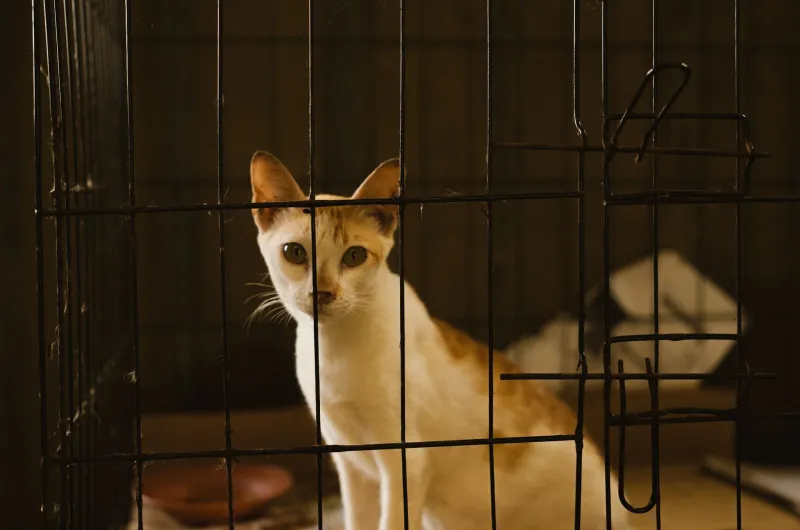
Somewhere in a shelter right now, there's a cat who does everything right. She approaches the front of her kennel. She head-butts your hand. She doesn't hiss, doesn't cower, doesn't have a dramatic backstory. She's just... ready. And she's been waiting for four months.
A few kennels down, there's a cat with one eye, a tendency to swat at strangers, and a sign that reads "NEEDS PATIENT ADOPTER." He went home last Tuesday.
This isn't an anomaly. It's a pattern — one that shelter workers across California have been quietly documenting for years, and one that behavioral economists are finally helping to explain.
The Paradox of Too Much Choice
When people walk into a shelter, they're rarely operating on pure logic. They're emotional, overwhelmed, and subject to the same cognitive shortcuts that govern every other consumer decision they make. And those shortcuts, it turns out, are terrible for cats.
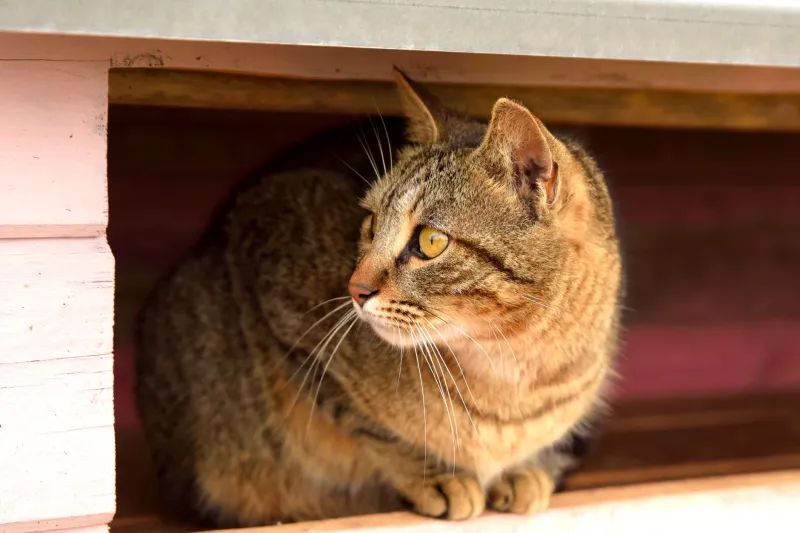
Research on decision-making — including work popularized by psychologist Barry Schwartz in The Paradox of Choice — suggests that when people are presented with too many options that seem functionally similar, they default to differentiating factors that may have nothing to do with actual compatibility. In a shelter context, that means a visitor scanning a row of adult tabby cats might unconsciously latch onto the one who seems most "interesting" — even if interesting means anxious, reactive, or visibly stressed.
"We call it the rescue narrative bias," says one adoption counselor at a Bay Area shelter who asked not to be identified by name. "People come in wanting to save something. A cat who looks like she needs saving feels more emotionally satisfying than a cat who's just sitting there being perfectly lovely."
The result is a counterintuitive outcome: the cats who are most behaviorally ready for home life — relaxed, social, adaptable — can actually seem less compelling to adopters precisely because they're not performing distress.
Aesthetics Over Compatibility
It's not just about drama. Appearance plays a staggering role in adoption decisions, and the data is not flattering.
A 2022 study published in Animals found that coat color, facial features, and perceived "cuteness" were among the strongest predictors of adoption speed — often outweighing behavioral assessments or staff recommendations. Black cats, plain tabbies, and older cats with common markings consistently waited longer, regardless of temperament.
California shelters have been wrestling with this for years. Some have tried rebranding — giving cats more evocative names, writing more narrative-driven bios, staging adoption photos with props and natural light. These efforts help at the margins. But they don't fully address the underlying psychology driving the mismatch between who gets adopted and who's actually a good fit.
"We had a cat named Biscuit — a five-year-old orange tabby, neutered, vaccinated, loved kids, got along with dogs," recalls a rescue coordinator in Sacramento. "He sat for six months. Meanwhile, a cat we had to warn people about — scratched everyone, needed a very specific home — was gone in two weeks. People wanted the challenge."
How Adoption Counselors Are Accidentally Making It Worse
Here's where it gets uncomfortable. The humans guiding adopters through the process may be contributing to the problem without realizing it.
Interview-style adoption consultations — the standard model at most California shelters — tend to focus heavily on what the adopter wants rather than what the cat needs. Counselors ask about lifestyle, experience level, and preferences. They try to match. But research on interviewer bias suggests that when a counselor has a strong personal attachment to a particular animal, they unconsciously steer conversations in that direction, using language that frames their preferred cat as the more interesting or worthy choice.
Add to that the language shelters use in animal bios. Words like "selective," "quirky," "needs time to warm up," and "one-of-a-kind personality" have become shorthand for behavioral challenges — but to many adopters, they read as intriguing rather than cautionary. Meanwhile, words like "friendly," "easygoing," and "great with everyone" can register as generic or boring.
Some California rescues have started auditing their own language. Oakland-based rescue groups have begun piloting bio frameworks that lead with lifestyle compatibility — "perfect for a busy apartment," "ideal if you work from home" — rather than personality descriptors. Early results suggest adopters respond more strongly to seeing themselves in the match than to evaluating the cat in isolation.
Reframing the Ask
A handful of California shelters are going further, borrowing directly from behavioral economics to redesign the adoption experience itself.
One approach gaining traction is the "commitment device" model: instead of asking adopters to browse and choose, counselors present a single pre-matched candidate based on intake data and lifestyle questionnaires. The adopter meets that cat first, before seeing any others. Research on default options suggests that people are far more likely to stick with a presented choice than to override it — meaning that a well-matched "boring" cat presented confidently is more likely to go home than the same cat encountered incidentally in a row of kennels.
Other shelters are experimenting with longer interaction times. A five-minute kennel visit rewards the cat who performs immediately — usually the most anxious or attention-seeking animal in the room. Extended meet-and-greet sessions of 20 minutes or more allow calmer cats to show their actual personalities, and adopters who spend more time with an animal are significantly more likely to bond with them.
"Once you get someone to actually sit with a calm cat for half an hour, it's almost a done deal," says one volunteer coordinator in San Diego. "The problem is getting them to slow down enough to let that happen."
The Cats Who Keep Waiting
None of this is the adopter's fault, exactly. These are normal human cognitive patterns playing out in a high-emotion environment. But the consequences fall entirely on the animals.
Calm, healthy, behaviorally ready cats — often middle-aged, often common-looking, often with no dramatic story — are dying in California shelters at rates that have nothing to do with their adoptability in any objective sense. They're losing a psychological competition they didn't sign up for.
Changing that requires shelters to get smarter about human behavior, not just animal behavior. It requires counselors to lead with compatibility, not charisma. It requires bios that speak to lifestyle, not just personality. And it requires a willingness to challenge the rescue narrative — the idea that the most deserving animal is always the one who needs the most saving.
Sometimes the most deserving cat is the one sitting quietly at the front of her kennel, waiting for someone to notice that she's already exactly what they need.