Almost Always Female: The Weird Genetics Behind Calicos and What It Means for California Shelters
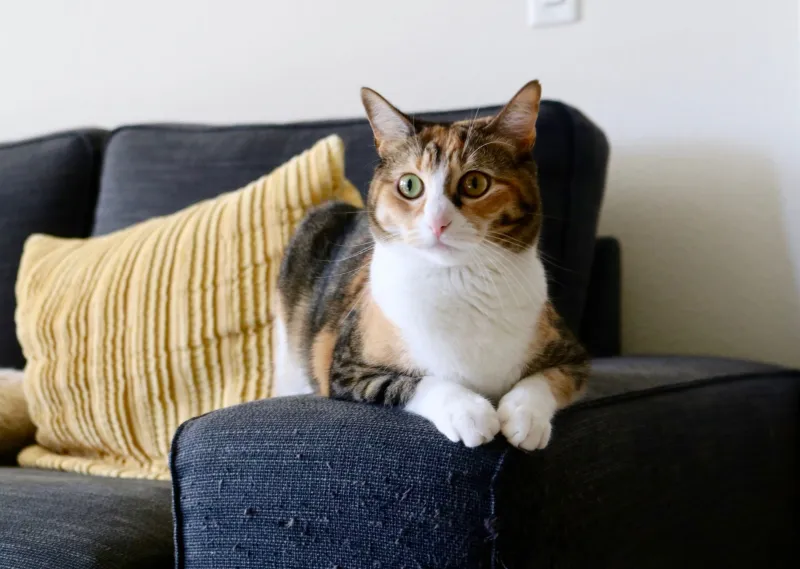
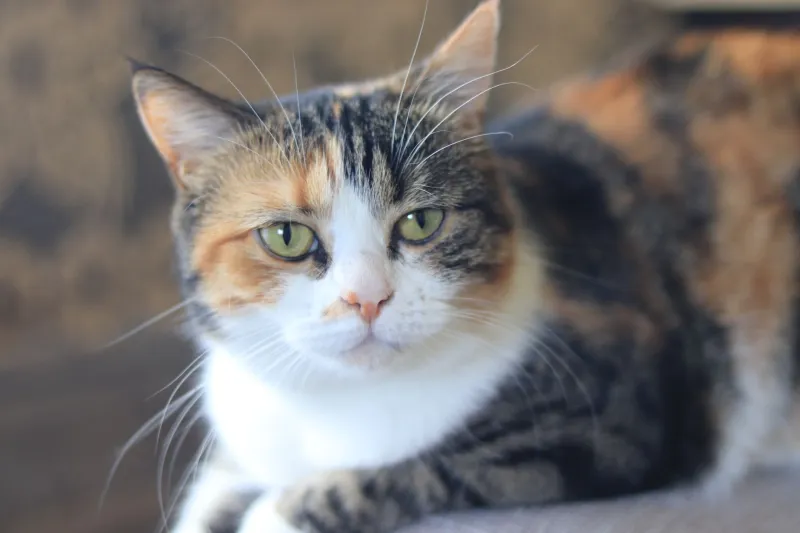
Walk into almost any California shelter on any given afternoon and you'll notice something if you pay attention: the calico cats are almost certainly female. So are the tortoiseshells. Every last one of them, practically speaking. It's not a regional thing, not a breeding trend, and definitely not a coincidence. It's genetics — and it's one of the most dramatic sex biases found anywhere in the animal kingdom.
About 99.9% of calico and tortoiseshell cats are female. That's not an estimate with a wide margin of error. That's just... biology doing something genuinely strange and kind of fascinating.
Two Colors, Two X Chromosomes
Here's the short version: the gene that controls orange versus black coat color in cats lives on the X chromosome. Female cats have two X chromosomes, which means they can carry both the orange-coding allele on one X and the black-coding allele on the other. The result? Patches of both colors, scattered across their body in patterns that are essentially unrepeatable — no two calicos or torties look exactly alike.
Male cats, on the other hand, only have one X chromosome (paired with a Y). That means they can be orange or black, but not both. To get a male calico, you'd need a cat with two X chromosomes and a Y — XXY — which is a chromosomal abnormality called Klinefelter syndrome. It happens, but rarely, somewhere around one in every 3,000 calico cats. And those males are almost always sterile.
So when shelter staff see a cat with that distinctive patchwork of orange, black, and white — or the swirled, fiery blend of a tortoiseshell — they know almost immediately what they're looking at: a female cat carrying a rare genetic signature that males simply can't replicate.
What Shelter Directors Are Noticing
For the people running California's animal welfare organizations, this genetic reality has some practical ripple effects that don't always make it into textbooks.
"We intake a lot of cats, and the coat color patterns really do tell you something about the animal before you even pull their intake paperwork," said one intake coordinator at a Bay Area municipal shelter who has worked in rescue for over a decade. "With calicos and torties, you're almost always dealing with a female — and that shapes how we think about spay status, litter history, all of it."
California shelters collectively take in hundreds of thousands of cats annually. The sex distribution matters for everything from spay-neuter resource planning to how animals are grouped in communal housing. Knowing that certain coat patterns are reliable proxies for sex isn't just trivia — it's a shortcut that experienced shelter workers use constantly.
But here's where it gets more interesting: some shelter directors say they've started noticing adoption patterns that seem loosely tied to coat color and sex in ways that are harder to explain purely through genetics.
"People come in with preferences they can't always articulate," said a rescue coordinator at a Southern California cat rescue that operates a network of foster homes. "A lot of adopters specifically ask for female cats. And calicos and torties — because they're almost always female — end up in a weird spot where they're both popular and sometimes harder to place, depending on the individual cat's personality."
The personality piece is where it gets contentious.
The 'Tortitude' Debate
Anyone who has spent time in cat rescue circles has heard the term: tortitude. It's shorthand for the idea that tortoiseshell cats have feistier, more independent, sometimes more challenging personalities than other cats. Plenty of tortie owners will swear by it. The science, though, is more complicated.
A 2015 study out of UC Davis — one of California's premier veterinary research institutions — did find some evidence that tortoiseshell and calico cats were more frequently described by their owners as "challenging" to handle compared to cats with other coat colors. But the researchers were careful to note that the link between coat color and behavior is indirect at best. Coat color genes don't directly code for personality. What's more likely is that X-inactivation — the process by which one of the two X chromosomes in female cells is randomly silenced — creates a kind of genetic mosaic that might influence hormone expression in subtle ways. But this is still an active area of research, not settled science.
What is clear is that the tortitude reputation affects adoptions. Some adopters seek it out — they want a cat with personality, a little edge, a companion that isn't going to just blend into the furniture. Others are scared off by it. Shelter staff say they spend a lot of time coaching potential adopters through the stereotype.
"We're always telling people: meet the cat, not the coat," said the Bay Area intake coordinator. "Every tortie is different. Some of them are the most affectionate cats we've ever had come through here."
The Rare Male: A Shelter Curiosity
When a male calico does show up at a California shelter — and it does happen, occasionally — it tends to cause a minor stir. Staff know what they're looking at: a chromosomal anomaly, almost certainly sterile, and genuinely rare.
These cats are sometimes treated as curiosities, and adopters who understand the genetics will occasionally seek them out specifically. But their rarity also raises welfare questions. Male calicos with Klinefelter syndrome can have health complications related to their chromosomal abnormality, including higher rates of obesity and joint issues. Shelters that encounter them need to be prepared to communicate that nuance to potential adopters.
It's a small population, but it illustrates something important: coat color and sex are deeply intertwined in feline biology in ways that have real consequences for the animals moving through California's rescue system.
Why This Matters Beyond the Coat
At its core, the calico and tortoiseshell phenomenon is a window into how genetics shapes the animals we share our lives with in ways most people never think about. The same X-linked inheritance mechanism that produces those iconic patchwork coats is the reason these cats are almost universally female. It's the same biological logic that produces orange tabbies that skew heavily male (also X-linked, also dramatic in its sex ratio).
For California's animal welfare community — which is grappling with persistent overcrowding, underfunding, and the ongoing challenge of matching individual cats to the right homes — understanding these patterns isn't just scientifically interesting. It's operationally useful. It helps shelters anticipate intake demographics, plan medical resources, and train staff to have better conversations with adopters.
And maybe most importantly, it's a reminder that every cat sitting in a shelter kennel is carrying a biological story that's genuinely worth knowing. The calico with the mismatched patches? She's a walking example of X-chromosome biology doing something mammals figured out tens of millions of years ago. That's not nothing. That's kind of incredible.
So next time you're at your local shelter and you spot a calico or a tortie in one of those kennels, you'll know: she's almost certainly female, she's genetically one of a kind, and she's probably been waiting longer than she deserves.