Two Colors, One Cat, Zero Y Chromosomes: The Genetics Behind California's Rarest Coat Pattern
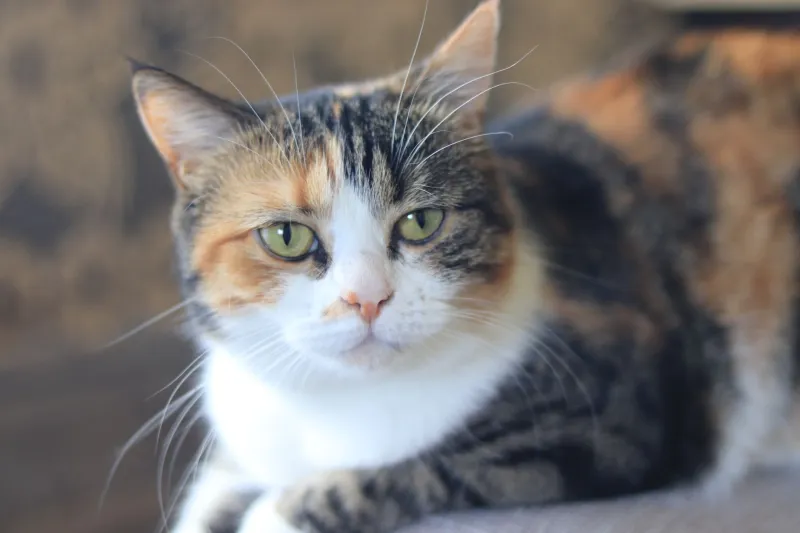
Walk through any California animal shelter on a busy Saturday and you'll spot them immediately — those impossibly gorgeous cats with coats that look like someone spilled an entire autumn into a single animal. Patches of orange, black, and cream tumbling across their fur in patterns that no two cats share exactly. Calicos. Tortoiseshells. The showstoppers of the feline world.
Ask a shelter volunteer why nearly every single one of these cats is female and you'll probably get a shrug, a smile, and a "that's just how it is." But the actual answer is so much more interesting than that — it reaches down into the molecular machinery of life itself, into a biological process that happens in every cell of your cat's body before she's even born.
It All Starts With X
Here's the short version: coat color in cats is controlled by genes that live on the X chromosome. Specifically, the gene that determines whether a cat expresses orange fur or black fur sits right there on the X, not on any of the other chromosomes.
Female cats, like female humans, carry two X chromosomes (XX). Male cats carry one X and one Y (XY). That single difference is what makes calico and tortoiseshell coloring almost exclusively a female phenomenon.
When a female cat inherits one X chromosome carrying the "orange" version of the color gene and another X chromosome carrying the "black" version, something extraordinary happens. Her body can't use both instructions at the same time in every cell, so it does something called X-inactivation — essentially silencing one X chromosome at random in each individual cell during early embryonic development.
Some cells switch off the "orange" X. Others switch off the "black" X. As those cells multiply and eventually form the cat's skin and fur, they carry their inactivated X into every daughter cell they produce. The result? A mosaic. A living patchwork quilt of orange patches and black patches, laid down by which X chromosome happened to get silenced in which part of the developing embryo.
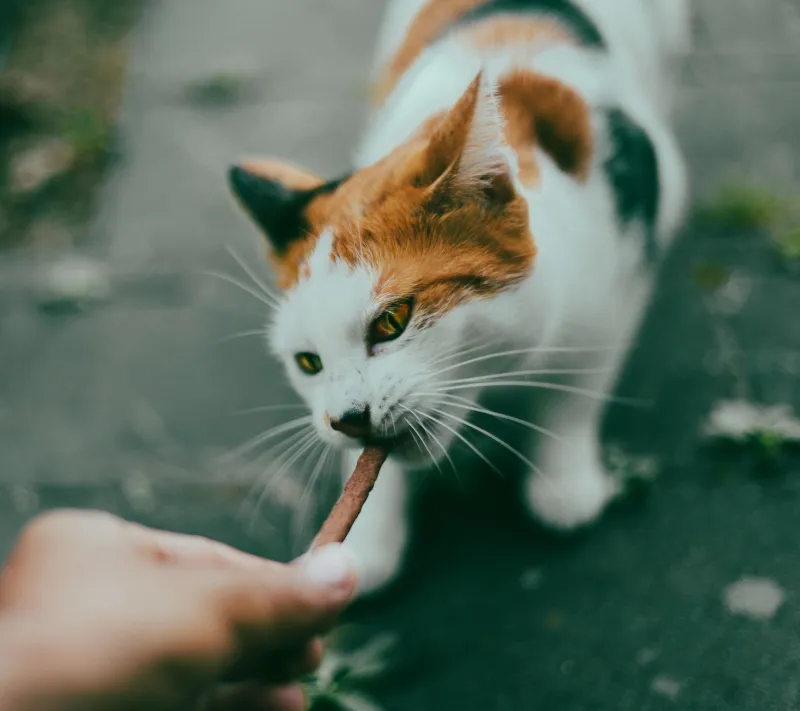
Calico cats add white into the mix — that's controlled by a separate gene entirely — but the orange-and-black patchwork underneath follows the exact same X-inactivation logic.
Why Males Almost Never Get the Memo
Male cats only have one X chromosome, which means they only carry one version of the color gene. They get orange or black, never both — at least not in the patchwork way. A male cat can absolutely be orange (often called a "ginger" or "red" cat) or black, but a true calico or tortoiseshell male? Vanishingly rare.
When it does happen — and it does, occasionally — the explanation is almost always a chromosomal anomaly. Some male calicos carry two X chromosomes along with their Y, making them XXY. In humans, this is called Klinefelter syndrome, and the feline equivalent works similarly. These cats have the chromosomal architecture to express both orange and black, but the extra X chromosome comes with consequences.
Male calicos and tortoiseshells are almost always sterile. Their XXY configuration disrupts normal reproductive development. They're also significantly rarer than their female counterparts — estimates suggest roughly one in three thousand calico cats is male. Some researchers put the figure even lower.
When a male calico does show up at a California shelter, the staff tends to notice. Quickly.
Every Calico Is Her Own Unique Experiment
One of the most remarkable things about X-inactivation is that it's random. Completely, unpredictably random — which means no two calico or tortoiseshell cats will ever have the same pattern. Not even identical twins, if such a thing existed in cats.
The patches aren't random in a chaotic, scattered way. They tend to be large and clearly defined because X-inactivation happens early, when the embryo is still a small cluster of cells. Each inactivation event affects a relatively large territory of future skin. But where exactly those territories fall? Pure biological chance.
This means every calico is, in a very literal sense, a one-of-a-kind genetic artwork that can never be replicated. Not by selective breeding. Not by cloning — a famous early cat cloning experiment produced a calico donor cat and a kitten with a completely different coat pattern, which surprised a lot of people who didn't fully appreciate how X-inactivation worked.
The Myth Problem: How Color Affects Adoptability
Here's where science bumps into shelter reality. Despite being genetically fascinating and visually striking, calico and tortoiseshell cats have historically carried some strange baggage in the adoption world.
For decades, a persistent myth circulated among cat people — and still does, honestly — that tortoiseshell cats have outsized, unpredictable personalities. "Tortitude" is the word you'll hear. The idea that these cats are feistier, more independent, more likely to scratch or hiss than your average tabby.
The science on this is genuinely mixed. A 2015 study from UC Davis's School of Veterinary Medicine (yes, right here in California) found that calico and tortoiseshell cats were more frequently described by their owners as aggressive during handling compared to cats with other coat colors. But the researchers were careful to note the limitations — owner perception, reporting bias, and the fact that correlation between coat color and personality would require a mechanism that nobody has clearly identified.
Subsequent research has been less conclusive. Many feline behaviorists argue that individual history, early socialization, and environment explain far more about a cat's personality than coat color ever could.
What the myth does affect, pretty clearly, is adoption rates. Shelters across California have anecdotally reported that tortoiseshell cats — especially adult ones — sometimes linger longer than their tabby neighbors. Whether that's "tortitude" mythology at work, or just the general bias toward kittens and certain coat patterns, is hard to untangle. But it's worth naming.
What California Shelters Are Seeing
Organizations up and down the state have started paying closer attention to how coat color intersects with adoption outcomes. Some Bay Area shelters have experimented with educational signage near tortoiseshell and calico enclosures, explaining the genetics in plain language — turning what might be perceived as a personality warning into a conversation starter about what makes these cats genuinely special.
The response, by most accounts, has been positive. People are curious. When you tell a prospective adopter that the orange-and-black cat in front of them is a living demonstration of X-inactivation — that the specific pattern on her face exists nowhere else on Earth — something shifts in how they look at her.
Science has a funny way of making wonder feel accessible.
The Bottom Line
Calico and tortoiseshell cats aren't just pretty. They're a walking, purring demonstration of one of biology's most elegant solutions to a genetic conflict — a cellular lottery played out in patches of orange and black across fur that no artist could replicate.
The next time you're at a California shelter and a tortoiseshell fixes you with that particular steady gaze, remember: she's carrying a chromosomal story that started before she had a face. Her coat is a map of randomness made permanent.
That's not "tortitude." That's just science being gorgeous.
And she's still waiting for someone to take her home.