The Pill Problem: What's Really Going On When Your Cat Spits Out Every Medication You Give Them
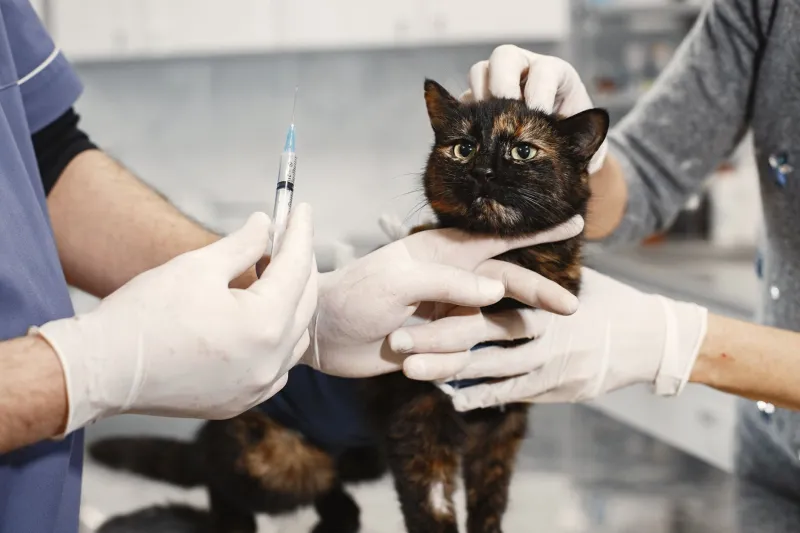
You've done everything right. You wrapped your cat in a towel burrito. You hid the pill in a treat. You tried the quick-toss-to-the-back-of-the-throat move you found on YouTube at 11 PM. And still, somehow, that tiny capsule ended up on your kitchen floor — covered in cat spit and contempt.
If you've been through the medication wars with a sick cat, you know the particular despair of watching a $4 pill get launched across the room by an animal who weighs eleven pounds but apparently has the jaw strength of a much larger problem. But here's the thing: your cat isn't being dramatic for fun. There's real neuroscience behind why cats are so catastrophically difficult to medicate, and understanding it is the first step toward actually getting treatment into them.
Why Cats Experience Bitterness So Intensely
Cats are obligate carnivores, which means millions of years of evolution have shaped their sensory systems around one thing: meat. Unlike humans — who have around 9,000 taste buds — cats have roughly 470. That sounds like they'd be less sensitive to flavor, but the reality is more complicated.
Cats have a heightened sensitivity to bitter compounds, which makes evolutionary sense. In the wild, bitterness often signals toxins or spoiled food. A cat's instinct to reject bitter-tasting substances is essentially a survival mechanism that got baked into their neurology long before anyone was trying to give them amoxicillin.
Most medications — antibiotics, anti-inflammatories, antiparasitics — are genuinely bitter. Even when coated or flavored, many drugs have a chemical signature that cats detect immediately. Research into feline taste receptor genetics has found that cats express certain bitter taste receptor genes (from the TAS2R family) that are particularly sensitive to the kinds of alkaloid compounds found in many pharmaceuticals. So when your cat foams at the mouth after you pill them? That's not performance art. That's a legitimate physiological response to something their body has been primed to reject for thousands of generations.
The Stress Layer Makes Everything Worse
Here's where it gets more complicated. Even if a medication were completely tasteless, many cats would still resist taking it — because the act of being medicated is itself deeply stressful.
Cats are hardwired for control over their environment. Being restrained, having something forced into their mouth, and then being held down while you make sure they swallowed it hits every stress trigger a cat has. Their heart rate spikes. Cortisol floods their system. And critically, they start associating you — their trusted human — with something threatening.
Veterinary behaviorists have documented what's sometimes called a "negative medication spiral": a cat who resists once becomes harder to medicate the next time because they've now learned to anticipate the experience. The stress response kicks in earlier, the resistance gets more intense, and the whole household dreads medication time. For cats with chronic conditions requiring long-term treatment, this cycle can genuinely compromise care — owners give up, skip doses, or stop medicating altogether because the battle feels unwinnable.
Dr. Melissa Bain, a veterinary behaviorist at UC Davis School of Veterinary Medicine, has noted that stress-related medication refusal is one of the most underaddressed welfare issues in companion cat care. The good news is that the veterinary community is increasingly taking it seriously.
What California Vets Are Actually Doing Differently
Across California, a growing number of veterinary practices are moving away from the "just pill them" approach and toward what behaviorists call "low-stress medication protocols." The shift is partly pharmacological and partly behavioral, and it's making a real difference for cats with complex treatment needs.
Compounded medications have become a genuine game-changer. California has a robust network of veterinary compounding pharmacies — including several Bay Area and LA-based operations — that can reformulate medications into flavors cats actually tolerate. Chicken, tuna, and beef-flavored liquid suspensions aren't perfect, but they dramatically reduce the bitter-taste barrier. Compounding can also adjust concentration so that doses are smaller and easier to administer.
Transdermal gels are another option that's gained serious traction. These are medications formulated to absorb through the skin — typically applied to the inner ear flap — bypassing the whole oral administration nightmare entirely. Not every drug can be compounded into a transdermal form effectively (absorption rates vary significantly, and some medications just don't cross skin barriers well enough to be therapeutic), but for certain drugs like methimazole for hyperthyroidism, transdermal delivery has become a widely used alternative. California vets working with feral or semi-feral cats have found these especially valuable.
Long-acting injectable medications are also expanding the toolkit. Some antibiotics and other drugs are now available in formulations that require only a single veterinary-administered injection rather than a multi-week at-home pill regimen. For cat owners who are genuinely unable to medicate their pets safely, this option can be the difference between a cat getting treated and not.
Behavioral Strategies That Actually Have Evidence Behind Them
Beyond reformulation, veterinary behaviorists have developed practical protocols for reducing medication resistance that go beyond the towel burrito.
Desensitization before illness is probably the most underutilized approach. Getting cats comfortable with mouth handling, treat-based rewards, and pill pockets before they're sick means the behavior is already established when you actually need it. It's not realistic for everyone, but for cat owners who know a chronic condition is likely — senior cats, cats with a family history of certain diseases — building this tolerance early pays off.
Appetite-based timing matters more than most people realize. Cats who are slightly hungry are meaningfully more motivated to eat through a treat-hidden medication. Giving a pill attempt right before a meal, rather than after, shifts the odds. Similarly, using a small, high-value treat as the delivery vehicle — rather than their regular kibble — increases success rates.
The "three treat trick" has actual behavioral logic behind it: give one treat plain, one treat with the medication hidden inside, and one treat plain immediately after. The cat doesn't fixate on the middle treat as the suspicious one, and the final treat reinforces a positive association with the whole sequence. It doesn't work for every cat, but it has a better evidence base than most folk methods.
Pill guns and pill pockets have mixed reviews in the research, but the consensus is that pill guns — used correctly — are faster and less stressful than manual pilling for most cats. Speed matters here: the less time the cat spends anticipating and resisting, the lower the overall stress load.
When to Have the Conversation With Your Vet
If you're struggling to medicate your cat, the most important thing to know is that you should tell your vet. Seriously. Don't just quietly skip doses and hope for the best.
Many cat owners feel embarrassed admitting they can't get medication into their pet — like it reflects on them as a caregiver. It doesn't. It reflects on the fact that cats are genuinely difficult patients for reasons that have nothing to do with your competence. California vets who work with cats regularly have seen every possible variation of this situation, and most of them have access to compounding pharmacies, alternative formulations, and behavioral resources that can help.
The worst outcome is a cat with a treatable condition who isn't actually getting treated because the medication battle became too much. That's a welfare issue, and it's solvable — but only if you ask for help.
Your cat isn't trying to make your life difficult. They're responding to deep biological programming that was never designed to accommodate a twice-daily antibiotic course. The science is catching up to that reality, and so is the veterinary community. The pill problem isn't permanent — it's just a problem waiting for the right workaround.