Your Cat Has a Face Like No Other — and California Shelters Are Finally Using That to Bring Them Home
If you've ever lost a cat, you know the particular kind of dread that comes with it. You print flyers. You post in seventeen different neighborhood Facebook groups. You walk the block at dusk shaking a treat bag and feeling quietly ridiculous. And somewhere across town, your cat might be sitting in a shelter intake kennel, untagged and unscanned, waiting for someone to make the connection.
That gap — between the lost cat and the worried owner — has always been one of animal welfare's most frustrating problems. Microchips help, but only if the cat was chipped to begin with, and only if the scanner actually gets used. Collar tags fall off. Photos are blurry. Descriptions like "gray tabby, medium-sized, kind of fluffy" describe approximately 40% of all cats in California shelters at any given moment.
But something new is quietly changing the game. A handful of California animal welfare organizations are piloting machine learning-powered facial recognition systems designed specifically for cats — and the early results are genuinely exciting.
Every Whisker Tells a Story
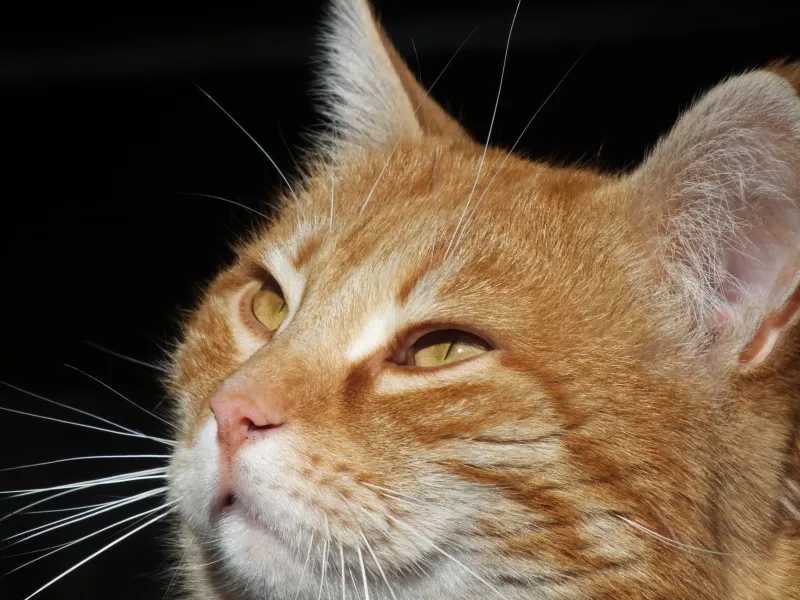
Here's the thing most people don't realize: your cat's face is a fingerprint. Not metaphorically — literally. The pattern of whisker follicles on a cat's muzzle, the unique topography of their nose leather, the exact geometry of their facial structure — these features are as individually distinct as a human fingerprint, and they don't change over time.
Researchers have known this for a while. Wildlife biologists have used individual facial markings to track wild cats — cheetahs, leopards, ocelots — in field studies for decades. The leap to domestic cats was always theoretically possible. What took time was building the datasets, refining the algorithms, and getting the technology small and affordable enough to actually deploy in a shelter environment.
That's where machine learning comes in. Modern image recognition systems can be trained to detect and map incredibly subtle facial features across thousands of photographs, building a kind of visual signature for each individual animal. The same underlying technology that lets your phone recognize your face in bad lighting can, with the right training data, distinguish one tabby from another with remarkable precision.
What the Pilots Are Actually Doing
Several California-based rescue groups and municipal shelters have begun integrating cat facial recognition tools into their intake workflows — some quietly, some with more fanfare. The basic process looks something like this: when a stray cat comes in, staff photograph the animal's face using a standardized protocol (consistent lighting, multiple angles, close focus on the muzzle). Those images get run through a recognition system that compares them against a database of reported-missing cats, previously scanned animals, and owner-submitted photos.
The matching isn't instant, and it isn't perfect — yet. Current systems work best with clear, well-lit images and can struggle with cats whose faces are obscured by matting, injury, or extreme stress behaviors like flattened ears and scrunched features. Shelters are still developing best practices around image capture, and the databases are only as useful as the photos people submit when their cats go missing.
But even in early-stage deployments, the technology is surfacing matches that human staff would have missed. A senior cat surrendered as a stray in one city turns out to be a reported-missing pet from a neighboring town. A feral-presenting cat with no collar is identified as a microchipped indoor pet whose chip was never registered. These aren't edge cases — they're exactly the kinds of reunions that used to fall through the cracks.
The Database Problem (and How to Fix It)
For facial recognition to work at scale, you need scale. That means building and maintaining large, high-quality databases of cat photos — which is harder than it sounds.
Right now, the ecosystem is fragmented. Some organizations are building their own proprietary databases. Others are integrating with existing lost-and-found platforms like PawBoost or Finding Rover, which has offered a cat facial recognition feature for several years. A few California counties are exploring whether regional animal services databases could be linked to allow cross-jurisdiction matching.
The missing link is public participation. The technology only reunites cats whose owners have submitted photos and reported them missing through a connected platform. That means outreach matters enormously. Welfare advocates are pushing for public education campaigns that teach cat owners to do three things before their cat ever goes missing: get a clear, well-lit photo of their cat's face, register that photo with a facial recognition platform, and make sure any microchip is registered with current contact information.
It's the kind of preparation that feels unnecessary right up until the moment it absolutely isn't.
Why Cats Specifically Need This
Dogs have it easier, statistically speaking. They're more likely to be microchipped. They're more likely to be wearing a collar. They're more likely to be recognized and reported when found. Lost dogs also tend to stay closer to home and are more often picked up by good samaritans who bring them directly to shelters.
Cats are harder. They roam. They hide. They can survive outdoors for extended periods, which means they sometimes don't surface in the shelter system until weeks after going missing — by which point some owners have stopped checking. Community cats and owned strays are visually indistinguishable to the average person. And cats in shelters, stressed and shut down, often don't behave in ways that help staff identify them as someone's beloved pet.
Facial recognition sidesteps all of that. It doesn't care whether the cat is friendly or feral-presenting. It doesn't require a tag or a chip. It just needs a face — and every cat has one.
What Comes Next
The researchers and shelter professionals working on this technology are cautiously optimistic but clear-eyed about the work still ahead. Accuracy rates need to improve, especially for cats with similar coloring or markings. Databases need to grow and connect. Intake photography protocols need to be standardized across organizations. And the whole system needs to be accessible to the smaller, under-resourced rescues that handle a huge portion of California's shelter population.
There's also a meaningful conversation happening about data privacy and ethics — who owns the images, how long they're retained, and how to prevent misuse. These are the same questions being asked about human facial recognition, and the animal welfare community is wise to be asking them early.
But the trajectory is clear. The technology works. The need is real. And California, with its dense network of shelters, rescue organizations, and tech-adjacent animal welfare advocates, is exactly the right place to be figuring this out.
Your cat's face is unique. It always has been. We're just finally building the tools to use that fact to bring them home.