Still Doesn't Mean Safe: The Hidden Science of Why Stressed Cats Shut Down
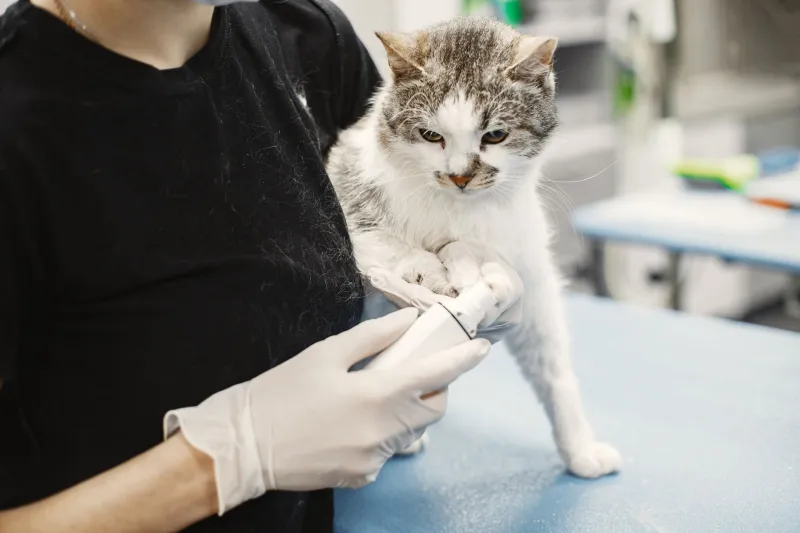
There's a moment a lot of cat owners know well. You're in the car, headed to the vet. Your cat has gone completely still in their carrier — no yowling, no pawing at the door, no dramatic protests. You think: okay, we're good. They've calmed down.
Except they haven't. Not even close.
What you're watching is one of the most misread behaviors in feline medicine — and according to California-based animal behaviorists, it happens constantly, in clinics and living rooms alike. That statue-still cat isn't relaxed. They're likely in a state of acute stress, doing exactly what millions of years of evolution wired them to do when things feel genuinely dangerous.
The Ancient Logic of Freezing
Cats are both predators and prey. That dual identity shapes almost everything about how they respond to threats — and freezing is one of the most fundamental responses in their toolkit.
When a cat perceives something as dangerous or overwhelming, the brain's threat-detection system kicks into overdrive. The amygdala — the part of the brain that processes fear — signals the hypothalamus, which floods the body with stress hormones including cortisol and adrenaline. Heart rate spikes. Muscles tense. Breathing becomes shallow.
And then, very often, the cat just... stops moving.
This is called tonic immobility, or more colloquially, the freeze response. It's the third branch of what most people know as "fight or flight" — the less-discussed "freeze" option that animals across the evolutionary spectrum rely on when neither fighting nor fleeing feels viable. In the wild, a small cat facing a predator that reacts to movement has an obvious incentive to become a furry statue. Stillness equals invisibility. Invisibility equals survival.
The problem is that this hardwired mechanism doesn't turn off just because the threat is a vet tech with a thermometer instead of a coyote.
Why Vets and Owners Get It Wrong
Dr. researchers at UC Davis's veterinary behavior program have spent years looking at how stress manifests in cats during clinical settings — and the findings are pretty uncomfortable for anyone who's ever assumed a quiet cat was a happy cat.
The freeze response is particularly easy to misread because it looks like compliance. The cat isn't fighting. They're not vocalizing. They're not scratching anyone. To an untrained eye — and honestly, even to experienced eyes — that can register as the cat being cooperative, or at least tolerant.
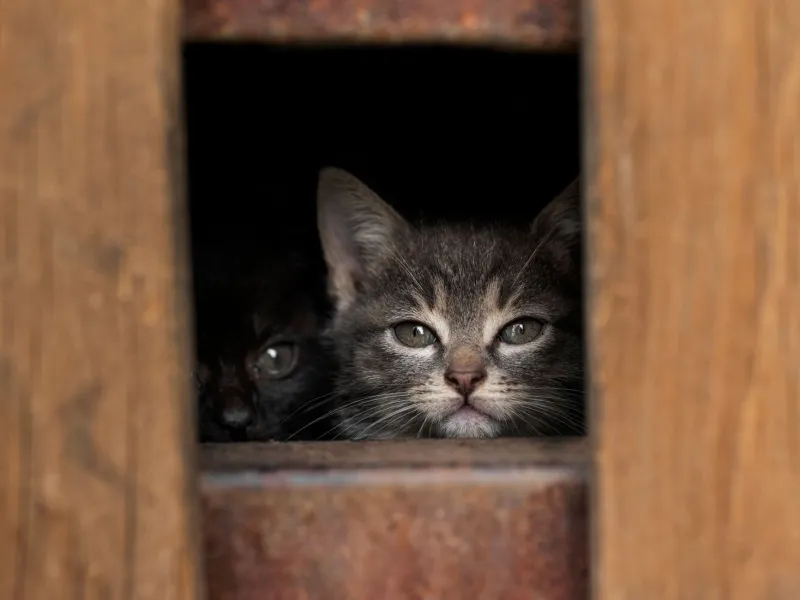
But look closer and the signs are there. A frozen, stressed cat typically shows a rigid, hunched posture rather than a relaxed, neutral one. Their pupils are often dilated wide even in a well-lit room. Their ears may be slightly flattened or rotated back. Their tail, if visible, might be tucked tight to the body. Whiskers are often pulled back against the face rather than fanned forward.
Breathing is another tell — shallow, rapid, almost imperceptible breaths are common during freeze states. Some cats will also show what behaviorists call "whale eye," where the whites of the eyes become visible at the edges as the cat keeps their head still but tracks movement with their gaze.
None of this screams distress the way hissing or scratching does. Which is exactly why it gets missed.
What's Actually Happening in Their Body
Here's where it gets a little alarming. A cat in a sustained freeze response isn't just mentally stressed — they're experiencing real physiological strain. Cortisol levels during freeze states can be comparable to those seen during active fight-or-flight responses. The cardiovascular system is working hard. Muscles held in rigid tension for extended periods create physical fatigue.
In clinical settings, this matters a lot. A cat whose stress is misread as calm may receive less careful handling, longer procedures without breaks, or be placed back in a carrier without any decompression time. All of that compounds the stress load — and over time, repeated experiences like this can actually change how a cat's nervous system responds to stress, making them more reactive and harder to handle in the future, not less.
This is part of why Fear Free veterinary certification — a movement that's gained real traction in California clinics over the past decade — places such emphasis on reading subtle feline body language rather than relying on behavioral silence as a green light.
The Freeze vs. Actual Calm: Learning the Difference
So what does a genuinely relaxed cat look like, compared to a frozen one? The contrast is actually pretty clear once you know what you're looking for.
A calm cat carries their weight loosely. Their posture is soft — maybe even a little sloppy. They might shift positions, blink slowly, or show brief curiosity about their environment. Their tail rests naturally rather than being locked in place. Pupils are normal-sized for the lighting conditions. They may vocalize mildly, groom themselves briefly, or sniff around.
A frozen cat, by contrast, looks almost too still. There's a rigidity to them that's hard to describe until you've seen it — like they've decided that if they don't move, maybe the scary thing won't notice them. It's a posture of endurance, not ease.
California animal behaviorists working with shelter cats see this constantly. Cats who sit perfectly still in their kennels during adoption events are sometimes passed over because they seem "boring" or "unresponsive" — when in reality, they may be bright, social animals who are simply overwhelmed by the noise and activity of a busy shelter floor.
Helping a Frozen Cat Feel Actually Safe
The good news is that freeze responses aren't permanent, and there's a lot you can do — both at home and in veterinary settings — to help anxious cats move from immobilized to genuinely secure.
Give them control. Cats freeze partly because they feel trapped. Offering hiding spots, elevated perches, and escape routes during stressful situations (including vet visits, if your clinic allows it) can reduce the perceived threat level significantly. A cat who can choose to hide often feels safer than one who's forced to stay visible.
Slow everything down. During a freeze episode, resist the urge to pick up, pet, or reassure your cat with touch. Physical contact during a freeze state can actually startle them into fight-or-flight. Instead, lower yourself to their level, avert your gaze, and just exist nearby without demands.
Pheromone support helps. Feliway and similar synthetic feline pheromone products have legitimate research support for reducing stress responses in cats. Using them in carriers, in the car, or in rooms where your cat frequently freezes can take the edge off the threat signal their brain is sending.
Talk to your vet about pre-visit medication. This has become much more mainstream in California's progressive veterinary community. Gabapentin, given a couple of hours before a vet appointment, can meaningfully reduce anxiety without sedating a cat into oblivion. It's worth asking about.
Build positive associations slowly. If your cat freezes every time the carrier comes out, the carrier has become a threat cue all on its own. Leaving it out permanently, feeding treats near it, and making it a nap spot can gradually rewire that association over weeks.
The Bottom Line
A still cat isn't a safe cat — at least not automatically. Understanding the freeze response means rethinking one of our most common assumptions about feline behavior, and it means advocating harder for cats who suffer quietly instead of loudly.
Your frozen cat isn't being stoic or cooperative. They're doing the best they can with the nervous system they've got. The least we can do is learn to read them accurately — and then actually do something about what we see.